How to Choose the Right Towel for Daily Use
Choosing a towel might seem simple, but small differences in fabric, construction, and weight can significantly affect comfort, absorbency, and durability. Many buyers focus on labels and marketing terms, yet overlook the factors that actually matter for everyday use.
This guide explains how to choose the right towel for daily use by breaking down fabric types, GSM, size, and care considerations in a clear, practical way.
1. Start with the fabric
The fabric of a towel determines how it feels on the skin, how well it absorbs water, and how long it lasts.
Cotton towels
Cotton is the most common and practical choice for daily-use towels.
-
Soft and comfortable on the skin
-
Good absorbency
-
Breathable and easy to maintain
Long-staple cotton varieties generally feel smoother and last longer, but even regular cotton towels can perform well if the construction is good.
Microfiber towels
Microfiber towels are made from synthetic fibres and are often marketed as quick-drying.
-
Lightweight
-
Fast drying
-
Less bulky
However, microfiber towels usually feel less natural on the skin and may not absorb water in the same way cotton does. For daily bathing use, many people prefer cotton for comfort.
For everyday home use, cotton towels are usually the safer and more comfortable choice.
2. Understand GSM (grams per square metre)
GSM refers to the weight and density of a towel. It directly affects thickness, absorbency, and drying time.
-
400–500 GSM: Lightweight, faster drying, suitable for humid climates
-
500–600 GSM: Balanced option for daily home use
-
600+ GSM: Thicker and plush, but slower to dry
Higher GSM does not always mean better. Very heavy towels can stay damp longer and develop odor if not dried properly.
For daily use, a towel in the 500–600 GSM range offers the best balance.
3. Choose the right towel size
Towel size affects both comfort and practicality.
-
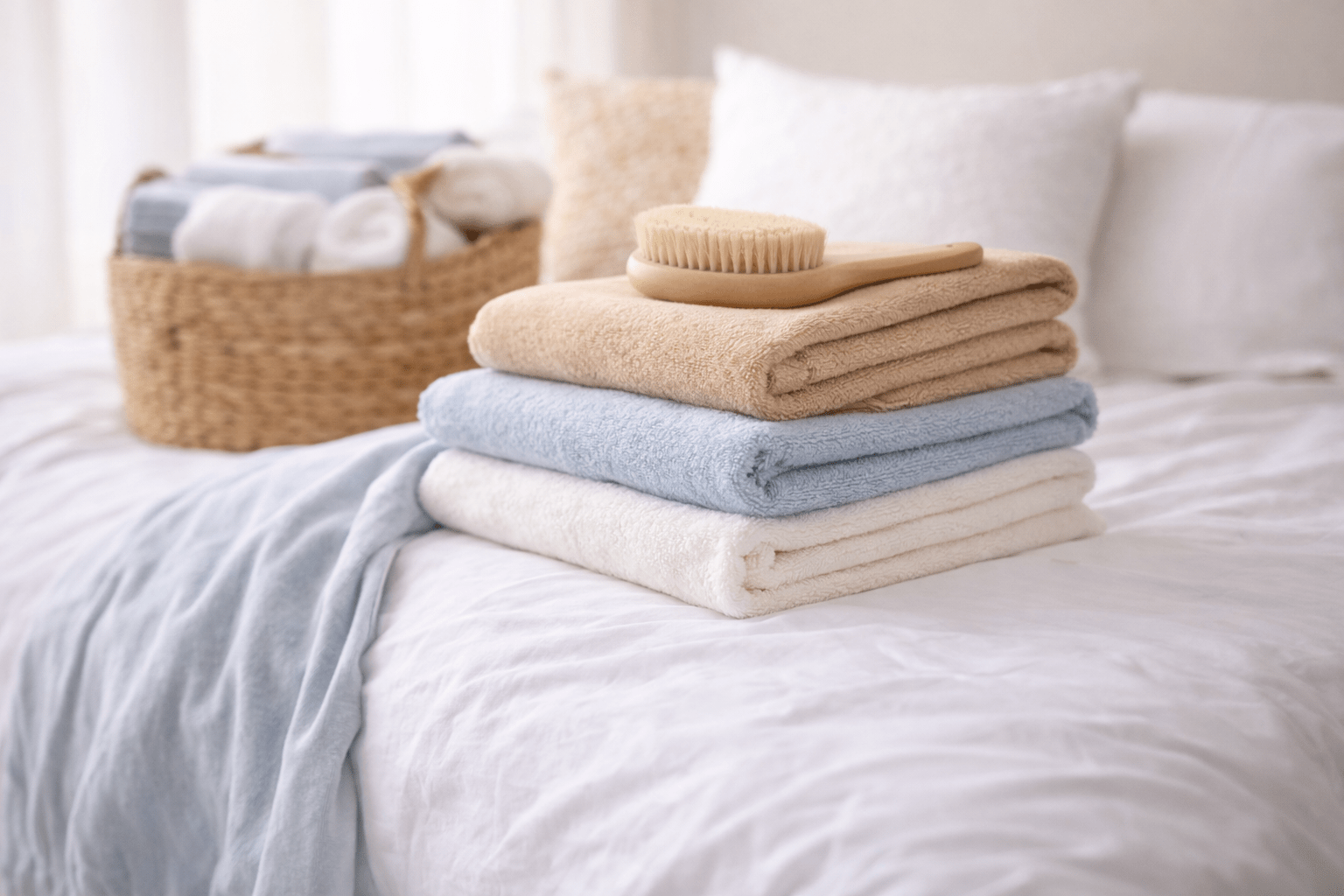
Bath towels: Standard size, suitable for everyday use
-
Bath sheets: Larger and more luxurious, but take longer to dry
-
Hand towels: Useful for frequent hand drying
-
Face towels: Best kept separate for hygiene
For daily bathing, a standard bath towel is usually sufficient and easier to maintain than oversized options.
4. Look at the weave and construction
The way a towel is woven affects how it performs.
-
Terry towels: Looped construction, good absorbency, common for daily use
-
Low-twist or zero-twist towels: Softer feel, but may wear faster if quality is low
Avoid towels that shed excessively or feel loosely constructed, as this can indicate lower durability.
5. Consider drying time and climate
In humid environments or homes without strong ventilation, drying time matters.
-
Medium-weight towels dry faster
-
Thicker towels require more airflow and sunlight
-
Poor drying increases the risk of odor buildup
If towels do not dry completely between uses, even high-quality towels can develop smell over time.
6. Don’t rely only on labels and claims
Terms like “luxury,” “hotel quality,” or “premium” are not regulated. They do not guarantee better performance.
Instead, focus on:
-
Fabric type
-
GSM range
-
Construction quality
-
Practical suitability for your environment
Understanding these basics is more reliable than marketing language.
Final thoughts
The right towel for daily use is one that balances comfort, absorbency, drying time, and ease of care. For most households, a cotton towel with medium GSM and standard size works best.
Rather than choosing the heaviest or most expensive option, focus on how the towel will be used and maintained in everyday conditions.